Introduction
Clicker training for cats has become one of the most effective ways to shape behavior, encourage bonding, and stimulate mental engagement. Unlike traditional methods that rely on scolding or punishment, clicker training for cats uses positive reinforcement, shaping small wins into reliable routines. Whether you want polite greetings, peaceful mealtimes, or enrichment for an indoor pet, clicker training for cats provides a structured path to progress. In this guide, you’ll learn how to begin, what tools to use, and how to apply 12 practical steps that make the process rewarding and predictable for both you and your feline companion.
What Is Clicker Training for Cats?
Clicker training for cats is a conditioning technique based on associating a sharp clicking sound with a reward. The click marks the exact moment your cat performs the desired action, which speeds up learning. Over time, cats understand that a click always means something good is coming, so they begin to repeat and refine behaviors. Because the sound is consistent, quick, and unemotional, clicker training for cats allows clearer communication than voice commands alone.
Why Clicker Training for Cats Works
Cats respond exceptionally well to reward-based learning because it removes pressure and builds confidence. With clicker training for cats, the process celebrates curiosity and natural feline tendencies. The method works because:
-
The click is immediate and unmistakable.
-
Rewards trigger motivation and excitement.
-
Even shy or cautious cats feel safe participating.
-
Training sessions stay short and manageable.
-
Cats control the pace of progress.
As a result, clicker training for cats becomes not just a teaching method but a bonding activity rooted in trust and mutual enjoyment.
Step 1: Introduce the Clicker
Start by helping your cat understand what the click means. Sit in a quiet room, click once, then immediately offer a small treat. Repeat this 10–15 times. After a few sessions, your cat will begin to look toward you after each click, expecting a reward. This foundational process is essential for all future clicker training for cats.
Step 2: Choose High-Value Rewards
The success of clicker training for cats depends heavily on motivation. Choose soft, aromatic treats your cat loves, breaking them into tiny pieces to avoid overfeeding. Some cats prefer freeze-dried salmon, others cooked chicken, and some respond best to a lickable treat. Observe which option increases alertness and enthusiasm.
Step 3: Begin with Simple Behaviors
Rather than starting with tricks, begin clicker training for cats by marking behaviors the cat already offers. These may include sitting, coming toward you, touching your hand, or making eye contact. Each time the behavior happens naturally, click and treat. This warms your cat up to learning without pressure.
Step 4: Teach “Targeting”
Target training is one of the core skills in clicker training for cats. Hold out a small target stick, or even the end of a pen. When your cat sniffs or touches it with their nose, click and treat. Gradually move the target to different positions to guide your cat into following it. Targeting becomes the foundation for teaching spins, jumps, and polite behavior around guests.
Step 5: Add a Verbal Cue
Once your cat reliably performs a behavior after following the target or offering it on their own, introduce a verbal cue. Say the command first, wait a second, then present the target or allow the behavior to occur. Click and treat. Eventually, your cat learns that the cue predicts what to do, another core benefit of clicker training for cats.
Step 6: Train One Skill at a Time
Cats learn best when only one new concept is introduced per session. Keep training intervals short—around 3 to 5 minutes. Because clicker training for cats emphasizes clarity, focusing on a single behavior prevents confusion and fatigue.
Step 7: Create an Enrichment Routine
Clicker training for cats can be incorporated into daily routines to reduce boredom and increase physical and mental stimulation. You can shape behaviors such as entering a carrier willingly, staying calm before meals, or walking to a designated area on cue. These small habits have a large impact on household harmony.
Step 8: Shape Complex Behaviors
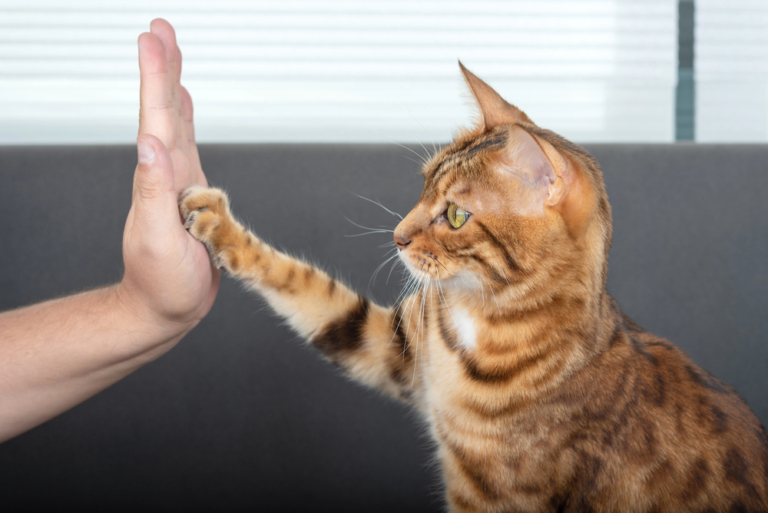
Once your cat becomes comfortable with simple behaviors, you can combine skills to create more advanced actions. Examples include jumping through a hoop, high-fives, and retrieving small toys. Using clicker training for cats, you break each trick into micro-steps, rewarding progress gradually until the full behavior is achieved.
Step 9: Practice Around Distractions
As your cat becomes more confident, begin practicing in slightly more stimulating environments: another room, near a window, or with mild background noises. This helps generalize behaviors so they hold up in real situations. In advanced stages of clicker training for cats, gradual exposure increases reliability.
Step 10: Reduce Treat Frequency
When your cat performs a behavior consistently, begin shifting from constant treats to intermittent reinforcement. Continue to click every time but occasionally replace the treat with praise, petting, or play. This natural progression keeps the behavior strong without overfeeding, an important part of long-term clicker training for cats.
Step 11: Use Clicker Training for Practical Needs
Beyond tricks, clicker training for cats is ideal for solving behavioral challenges. You can condition calmness during grooming, reduce fear of nail trims, improve tolerance of a harness, or encourage positive carrier associations. Many veterinarians now recommend clicker training for cats to reduce stress and make home health routines easier.
Step 12: Maintain a Consistent Schedule
Consistency strengthens communication. Try to train daily or at least several times per week. Cats thrive on predictable routines, and regular clicker training for cats keeps their minds active and their confidence high. Celebrate progress, adjust when needed, and maintain a spirit of curiosity and patience.
Common Mistakes to Avoid
Even with a simple method like clicker training for cats, certain habits can delay progress:
• Clicking too late, confusing the cat
• Choosing low-value treats
• Training when the cat is tired or overstimulated
• Repeating cues too quickly
• Ending sessions abruptly
By being mindful and patient, you’ll help your cat learn comfortably and willingly.
Final Thoughts
Clicker training for cats opens the door to a deeper bond, improved communication, and lasting positive habits. Because the process is rooted in psychological clarity and reward-based motivation, cats of all ages benefit from the structure. With the 12 steps presented here, you can begin transforming everyday interactions into meaningful training moments that enrich your cat’s life and strengthen the connection you share.
Reference
https://www.aspca.org/pet-care/cat-care/common-cat-behavior-issues